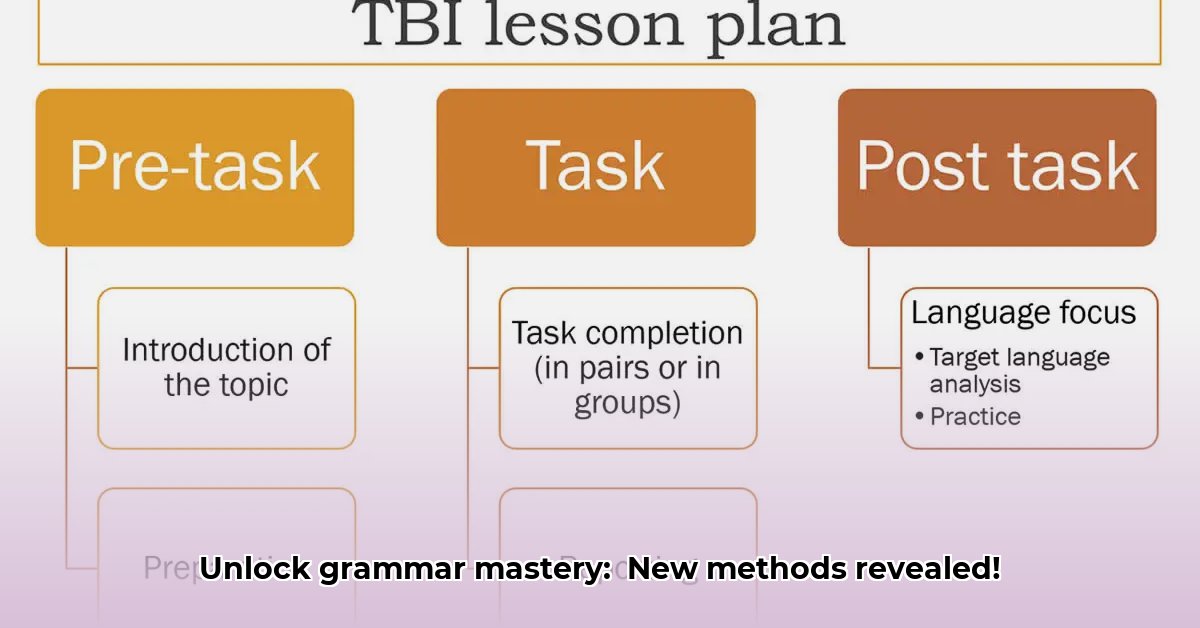
Escape the Drill-and-Kill: Contextualized Grammar Learning
Traditional grammar instruction often relies on rote memorization and isolated exercises, leading to disengagement and ineffective learning. Instead, let's embrace contextualized learning – integrating grammar into real-world applications to make it relevant and engaging. Think captivating stories, lively discussions, and authentic writing assignments. This approach mirrors natural language acquisition, where grammar is learned through use and immersion. Don't just state the rules; show students why they matter. How can we make grammar lessons less about rules and more about effective communication? For further insights into effective communication strategies, check out this helpful resource on power dynamics.
For example, during a persuasive essay unit, address comma splices and parallel structure naturally, showing students how these rules contribute to clear and effective communication. Incorporate grammar into ongoing projects. Have students craft short stories focusing on specific punctuation or engage in debates requiring precise grammar for persuasive arguments. This contextual approach significantly enhances understanding and retention compared to traditional methods. Why not analyze song lyrics for effective metaphor usage or dissect news articles for their sentence structure? This approach not only teaches grammar but also strengthens critical thinking and analytical abilities.
Making Grammar Interactive and Fun: Engaging Activities for All
Passive learning is a recipe for disengagement. Transform your classroom into an active and collaborative hub. Games, group projects, and peer review make learning engaging and foster teamwork. Technology also plays a significant role. Interactive whiteboards, educational apps, and online platforms offer exciting ways to reinforce learning and cater to diverse learning styles. How can interactive tools and collaborative projects help students actively participate in the learning process and improve retention?
Consider grammar as a puzzle; interactive activities help students enjoy the process of solving it. This leads to better retention and fosters a positive attitude towards grammar. Many free online resources and apps offer engaging grammar games. These readily complement classroom instruction.
Smart Technology: Tools for the Modern Grammar Classroom
Technology provides incredible opportunities to enhance grammar teaching. Interactive exercises, adaptive learning platforms, and grammar-checking tools personalize learning and provide immediate feedback. This allows for self-directed learning and targeted practice on areas needing improvement. Students can learn at their own pace. The key is thoughtful integration, not replacement of traditional methods. What are the most effective ways to leverage technology without overwhelming students or detracting from the human element of teaching?
Consider using interactive online exercises that provide instant feedback and allow students to focus on their specific weaknesses. Adaptive learning platforms adjust to individual needs, offering personalized learning paths. Grammar-checking tools can assist students with editing and proofreading, providing valuable feedback. Use this technology thoughtfully as a supporting tool to complement not replace traditional methods.
Meeting Diverse Learning Needs: The Power of Differentiation
Every student is unique. Differentiated instruction adapts to individual learning styles and needs. This can involve varied assignments, visual aids, or different support levels. Remember, progress, not perfection, is the measure of success. How can we best support diverse learners by implementing varied teaching and assessment methodologies?
Offer choices! Some students may thrive with short quizzes, while others prefer in-depth projects. Adapt your teaching approaches to individual needs. This can include offering different assignment lengths or levels of support. By recognizing and catering to diverse learning styles, educators can ensure that every student has the opportunity to succeed.
Assessment: Evaluating Understanding, Not Just Memorization
Traditional tests often focus on rule memorization alone. This doesn't necessarily indicate true understanding. To effectively assess comprehension, incorporate real-world tasks such as writing emails, creating presentations, or participating in classroom debates. Observing student communication offers valuable insights into their actual comprehension. How can we move beyond rote memorization and assess true understanding of grammatical concepts?
Evaluate actual application, not just recitation. Assess students on how well they use their knowledge in their writing and speaking. Consider using observation, portfolios of work, and project-based assessments alongside more traditional testing methods.
Key Strategies at a Glance
Here's a concise summary of the key strategies for transforming grammar teaching:
- Contextualized Learning: Integrate grammar into real-world scenarios and meaningful activities. (Example: Using grammar in storytelling or debates).
- Interactive Learning: Use games, group work, and technology to actively engage students. (Example: Employing online grammar games or collaborative writing projects).
- Technology Integration: Utilize technology to personalize learning and provide instant feedback. (Example: Using grammar-checking software or interactive online exercises).
- Differentiated Instruction: Cater to diverse learning styles by offering varied assignments and support. (Example: Offering different assignment lengths or levels of support based on ability).
- Authentic Assessment: Measure true understanding through real-world applications, focusing on the application of knowledge, not just memorization. (Example: Evaluating student writing samples or oral presentations).
By implementing these actionable steps, you can create a more engaging and effective grammar learning environment, leading to improved student outcomes and a more positive attitude toward grammar. Remember, the field of language acquisition is constantly evolving, so stay current and adapt your approaches as new research and resources emerge.